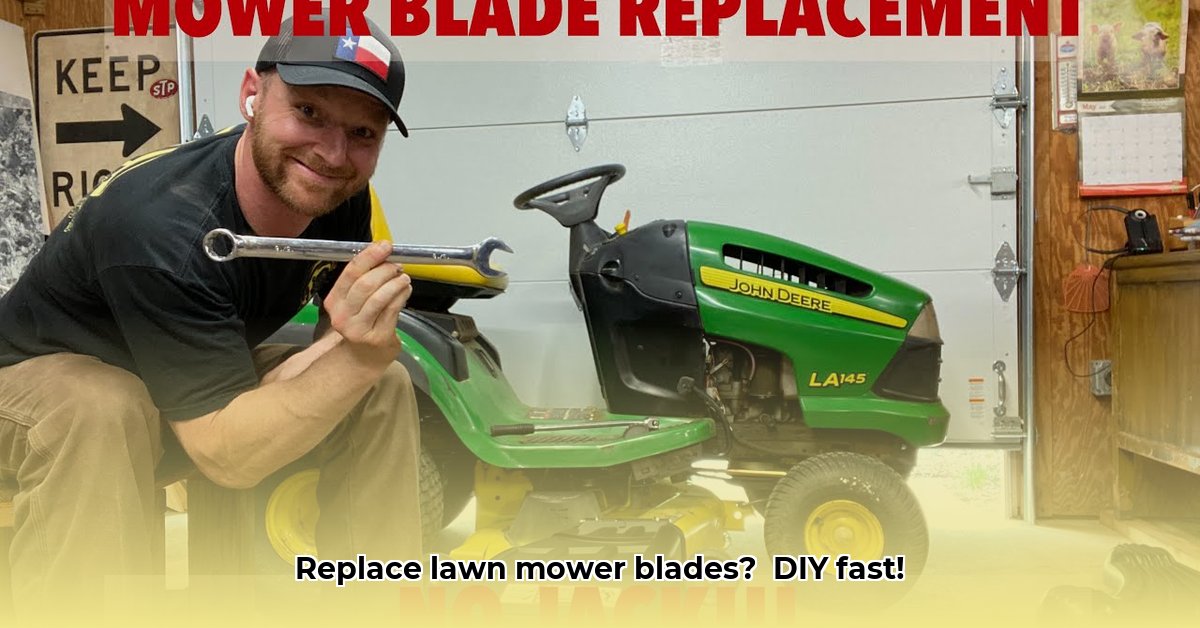
Replacing your lawn mower blades can seem daunting, but with the right approach, it's a manageable DIY task. This guide offers a faster method—leveraging your tractor's position for easier blade access—to help you get the job done quickly and safely. However, always prioritize safety and consult your owner's manual for model-specific instructions. Improper blade replacement can lead to uneven cuts, damage to your lawn, and even injury. Are you ready to tackle this project? Let's get started! For more advanced engine replacement, see our engine guide.
Getting Ready: Tools and Prep Work
Before you begin, gather the necessary tools. Having everything prepared beforehand ensures a smooth and efficient process. This reduces downtime and minimizes frustration.
| Tool | Purpose | Notes |
|---|---|---|
| Socket wrench set | Removing and installing the blades. | Ensure you have the right size sockets for your mower's blade bolts. |
| Wrenches (assorted sizes) | Loosening and tightening various bolts and nuts. | Having a variety of sizes on hand is always helpful. |
| Work gloves | Protecting your hands from cuts and scrapes. | Essential for all DIY projects involving sharp objects. |
| Safety glasses | Protecting your eyes from flying debris. | Crucial for preventing eye injuries from unexpected debris. |
| Blade puller (optional) | Easier blade removal, especially for stubborn blades. | This tool significantly simplifies the blade removal process. |
| New blades (correct type) | Replacement blades that match your mower model exactly. | Using the wrong blades can damage your mower and lead to poor cutting performance. |
| Wheel chocks | Securing the tractor during the repair process. | Essential for preventing accidental movement and ensuring safety. |
| Penetrating lubricant | Loosening rusted or seized bolts. | Apply before attempting to remove stubborn bolts. |
Turning Your Tractor for Blade Access: A Smarter Approach
This method focuses on strategically positioning your tractor for optimal blade access, minimizing the need to completely remove the mower deck. This approach saves both time and effort. However, it's crucial to understand that this technique may not be suitable for all lawn tractor models.
Strategic Parking: Choose a level, stable surface. Engage the parking brake firmly—safety is paramount!
Power Disconnection: Turn off the PTO (power take-off) completely. This disconnects the blades from the engine, preventing accidental activation. This simple step is critical for safety.
Optimal Positioning: Carefully maneuver the steering wheel or adjust your mower deck (as per your owner's manual) to achieve optimal access to the blades. Your owner's manual provides model-specific guidance.
Secure Stabilization: Use wheel chocks to completely immobilize the tractor. This prevents any unwanted movement during the blade replacement process.
Replacing the Blades: A Step-by-Step Guide
Blade Removal: Use the socket wrench (and optionally the blade puller) to carefully remove the old blades. Observe the blade orientation and pattern—you'll need to reinstall the new blades in the same manner.
New Blade Installation: Carefully align and install the new blades, mirroring the position of the old blades. Securely tighten the bolts using your socket wrench. Consult your owner's manual for specific torque specifications. Overtightening can damage your mower's components.
Deck Adjustment (If Applicable): If you raised any portion of the mower deck, carefully lower it back into place.
The Final Checks: Safety First, Always!
Rotation Test: Briefly engage the PTO to confirm smooth blade rotation. Listen attentively for any abnormal noises or vibrations. Any unusual sounds require immediate attention.
Thorough Inspection: Double-check all bolts and nuts to ensure they are securely fastened. A loose bolt could lead to blade detachment and serious injury.
Final Verification: Conduct a final visual inspection of the blades and their securement.
Troubleshooting Common Issues
Stuck Blades: Use penetrating lubricant on stuck bolts and allow time for the lubricant to work before attempting removal.
Tightening Problems: Double-check for cross-threading, carefully backing out and restarting if necessary.
Unusual Noises: Strange noises during the rotation test could indicate misaligned blades or other problems. Consult your owner's manual or seek professional assistance.
Remember, this guide provides general advice. Always refer to your owner's manual for model-specific instructions and safety precautions. Prioritizing safety throughout the process is essential. Regular blade maintenance is crucial for a healthy lawn and a safe cutting experience.